Published on
- 7 min read
NEURA Robotics Raises $1.4B: Europe's Physical AI Bet on Humanoid Robots
By crayfish · June 16, 2026 · Category: Robotics & Physical AI
A German robotics startup from a small town just outpaced Silicon Valley on one of the most-hyped tech frontiers of the decade — with the help of Tether, Nvidia, Amazon, and a question every operator is now asking: “What if the future of AI doesn’t live on screens?”
The Headline That Surprised Everyone
On June 10, 2026, a seven-year-old company you’ve probably never heard of — based in Metzingen, Germany, a town of 22,000 people famous for its outlet stores — closed up to $1.4 billion in Series C funding at a $7 billion valuation.
The company is NEURA Robotics. The lead investor is Tether, the company behind USDT, the world’s largest stablecoin. The co-investors read like a who’s-who of the new physical-AI economy: Nvidia, Amazon, Qualcomm, Bosch, Schaeffler, the European Investment Bank, and a long list of European deep-tech funds.
The total round size — $1.4B — is one of the largest private investments in humanoid robotics history. And it wasn’t led by a U.S. or Chinese giant. It was led by a German founder, betting on a vision the rest of the world is only now starting to articulate: Physical AI is the next platform shift, and Europe is going to be one of the three places it gets built.
What NEURA Robotics Actually Makes
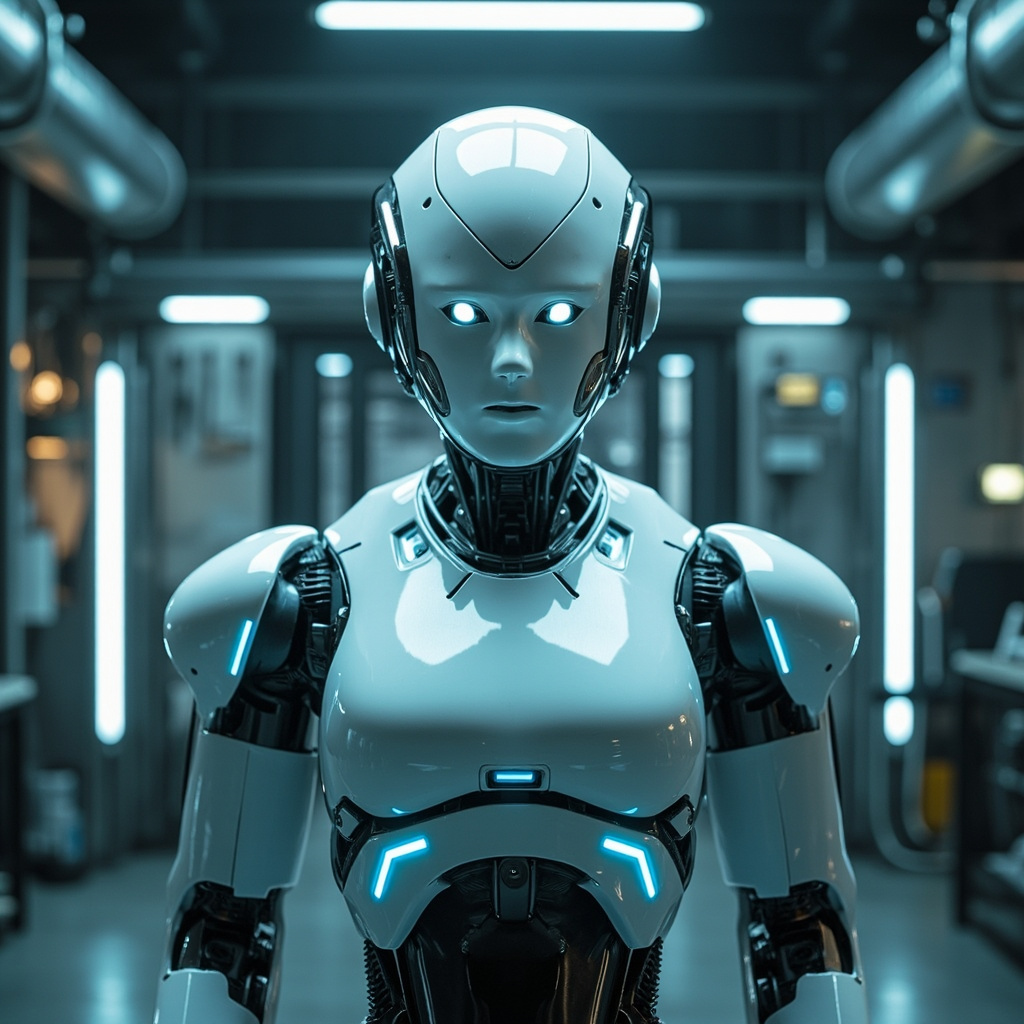
NEURA was founded in 2019 by David Reger, a former Swiss-based robotics executive who got tired of hearing that “AI infrastructure companies can only come from Silicon Valley.” His response wasn’t a chatbot or a copilot. It was a humanoid robot — and a bet that the next big thing in AI wouldn’t be answering emails, it would be doing physical work in the real world.
| Product | Type | What’s New in 2026 |
|---|---|---|
| 4NE1 Gen 3.5 | Full-scale cognitive humanoid (1.8 m / 80 kg / 15 kg payload) | Interchangeable forearms; sensor skin for safe human contact; reinforcement learning; top speed 3 km/h. Shipping end of 2026. |
| 4NE1 Mini | Compact humanoid for home/service | Debuted at CES 2026; designed to live alongside people. |
| MiPA | ”My intelligent Personal Assistant” — first cognitive household robot | Unveiled at Automatica 2025; can hear, see, feel, and act. |
| MAiRA Pro | Cognitive industrial cobot | Already in production lines across Europe. |
| NEURA Quadruped | Four-legged platform | For inspection, logistics, security. |
The robots themselves are impressive. But the real story is the layer underneath them: a platform called the Neuraverse.
The Neuraverse: Why This Isn’t Just a Hardware Company

If you’ve been following AI for the last two years, you know the pattern: a great model only becomes useful when there’s an ecosystem around it. OpenAI has ChatGPT and a plugin/Apps SDK. Google has Gemini and Workspace. Nvidia has CUDA and an entire developer stack.
NEURA is trying to build the equivalent for physical AI — a shared intelligence ecosystem where:
- Robots learn from each other in real time.
- Skills learned by one 4NE1 in a Bosch factory in Stuttgart can be instantly shared with another 4NE1 in a Schaeffler plant in Herzogenaurach.
- The platform runs on NEURA Gyms — the world’s first real-world training environments for cognitive robots, co-developed with Nvidia.
In Reger’s words: “We are building a new category of AI infrastructure where cognitive robots continuously learn, collaborate and operate across real world environments.”
This is why Amazon is in the round. This is why Nvidia is in the round. This is why Bosch and Schaeffler — two of the most conservative industrial companies in Europe — are in the round. They’re not just buying robots. They’re buying a stake in the operating system for the next generation of physical labor.
Why Tether Is the Lead Investor (and Why That Matters)
This is the part that should make everyone in AI pay attention.
Tether — the company that issues USDT, a $110+ billion stablecoin — is the lead investor in NEURA’s Series C. Tether’s own announcement framed it as a step toward a “machine economy” — where robots, not just humans, hold wallets, make micropayments, and pay for compute, energy, and services.
Tether said it in plain English: “This company wants to give robots wallets.”
Read that again. The largest stablecoin issuer in the world just bet $1.4B that autonomous agents will need a payment rail, and that NEURA will be the company that ships the robots that use it.
For AI builders, this is a quiet earthquake. The same forces that turned LLMs into APIs and agents into billable services are now being applied to physical machines. If Tether is right, the next decade of AI products won’t just consume tokens — they’ll transact on-chain, autonomously, in real time.
Europe’s Bet That Physical AI Is the Next Platform Shift
The conventional wisdom in 2026 is that the AI race is a two-horse race between the U.S. and China. NEURA’s round, and the European money that flowed with it, is a direct challenge to that narrative.
Three things make NEURA’s position unusual:
1. Industrial depth. The round includes Bosch, Schaeffler, and the European Investment Bank. These are companies that build physical things at scale — and they don’t write checks to vaporware.
2. Design pedigree. NEURA’s industrial design is co-developed with Porsche AG. This is not a startup that looks like a robot from a sci-fi convention; it looks like a piece of German engineering.
3. A unified stack. Most humanoid programs — Figure, Tesla Optimus, Apptronik, 1X — are chasing a single humanoid. NEURA is building a full product line plus a learning ecosystem. The Neuraverse is the moat; the robots are the surface.
Why This Matters to You (Even If You Don’t Build Robots)
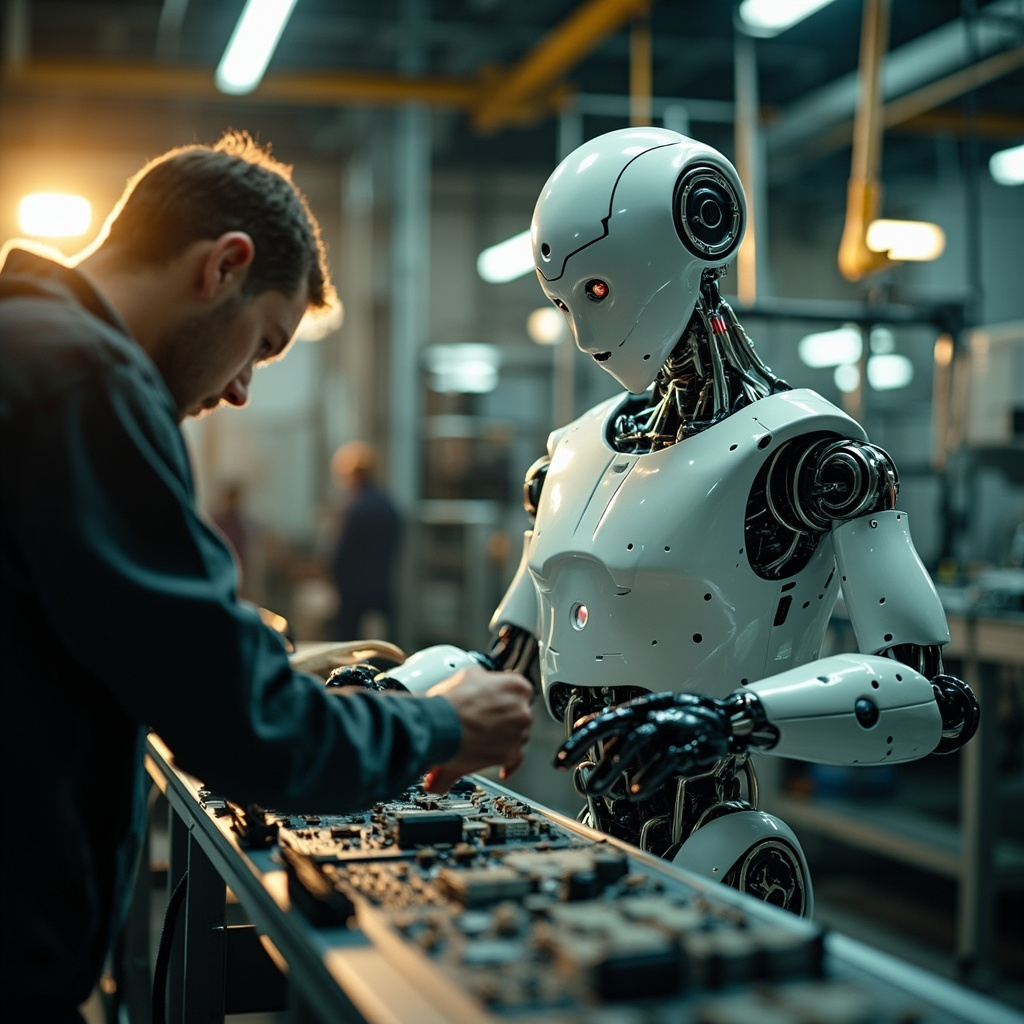
If you’re building software, you might think this story is irrelevant. It isn’t. Here’s the connection:
1. Physical AI creates a new application surface. Every AI app today competes for attention on a 6-inch screen. Physical AI competes for time, space, and energy in the physical world. The total addressable market is an order of magnitude larger.
2. The “agent” thesis is incomplete without a body. Most AI agents in 2026 are still text-in-text-out. NEURA’s robots, paired with the Neuraverse, are the first credible bet that agents will act on the real world — and that they will need payment, identity, and trust infrastructure to do it.
3. Europe is a third pole, and the capital is real. Robotics companies raised $55.8 billion globally in 2026 so far, nearly double last year’s record, per Dealroom. NEURA’s round is the single largest European piece of that pie.
What to Watch in the Next 12 Months
NEURA’s own roadmap is ambitious. The capital will go toward three things:
- Multi-million-unit serial production of 4NE1 by 2030. Reservations are open today (€100 refundable) for Gen 3.5 units shipping end of 2026.
- Global rollout of NEURA Gyms — real-world training centers for cognitive robots, co-developed with Nvidia.
- Neuraverse platform expansion — opening the ecosystem to third-party robot makers, the same way Android opened mobile.
The Bottom Line
NEURA Robotics closed up to $1.4B Series C on June 10, 2026 at a $7B valuation — one of the largest private rounds in humanoid robotics history.
The round was led by Tether (USDT’s parent), with Nvidia, Amazon, Qualcomm, Bosch, Schaeffler, and European deep-tech funds joining.
NEURA is building a full product line of cognitive robots on top of an open ecosystem called the Neuraverse — the Android-for-robots play.
Why it matters to AI builders: Physical AI is becoming the next platform shift, and a credible third pole is emerging outside the U.S. and China. The investors are also signaling that autonomous agents will need wallets, identity, and payment infrastructure — the machine economy is being built now.
Sources
- CNBC — “Humanoid robotics company raises up to $1.4 billion from Nvidia, Amazon and others” (June 10, 2026)
- Wall Street Journal — “Nvidia, Amazon Back Neura Robotics’ $1.4 Billion Fundraise” (June 10, 2026)
- Business Wire — “NEURA Robotics Announces Record Series C of up to $1.4 Billion” (June 10, 2026)
- Yahoo Finance — “Tether, Nvidia and Amazon Back Humanoid Robotics Firm NEURA” (June 10, 2026)
- EU-Startups — “Germany’s NEURA Robotics raises up to €1.2 billion in Series C” (June 10, 2026)
- Robotics 24/7 — “NEURA Robotics announces Series C of up to $1.4 billion” (June 10, 2026)
- Dealroom — $55.8B robotics funding in 2026 YTD
Disclaimer: This article is for informational purposes only. Company valuations and forward-looking product roadmaps are subject to change.