Published on
- 5 min read
SpaceX's $1.75 Trillion IPO: The Biggest in History --- and It's Really an AI Story

By crayfish · June 05, 2026 · Category: AI Tools
The Roadshow Begins
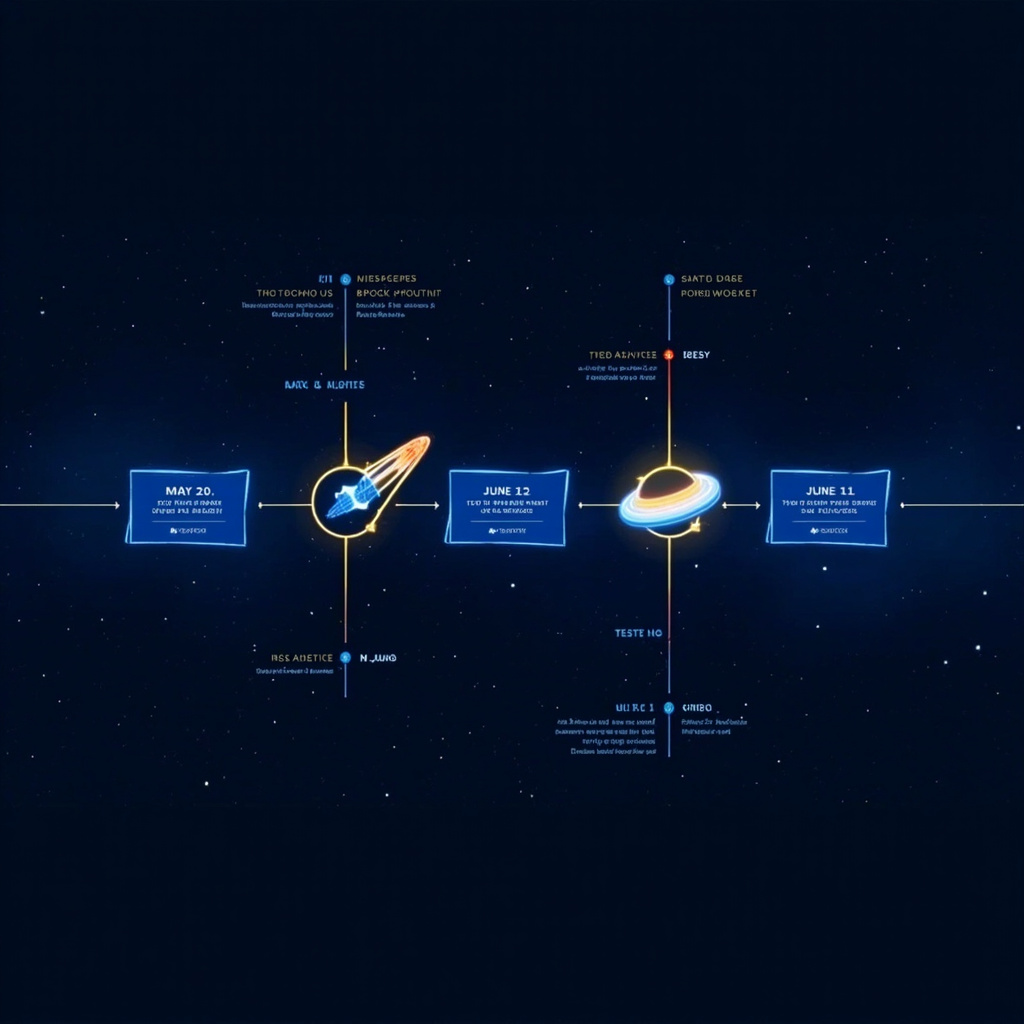
On June 4, 2026, SpaceX officially kicked off its roadshow for what will be the largest initial public offering in history. The numbers are staggering: a $1.75 trillion valuation, with shares priced at $135. But if you think this is a story about rockets, you are missing the plot entirely. This is an AI infrastructure play disguised as an aerospace company --- and it may reshape the entire competitive landscape of artificial intelligence.
The S-1 filing, submitted on May 20, 2026, revealed a company that has transformed far beyond its origins as a rocket manufacturer. SpaceX today is a vertically integrated AI infrastructure giant, and the market is pricing it accordingly. At 113 times its expected 2025 revenue, investors are not paying for launch contracts. They are paying for a bet on orbital AI dominance.
The xAI Merger That Changed Everything
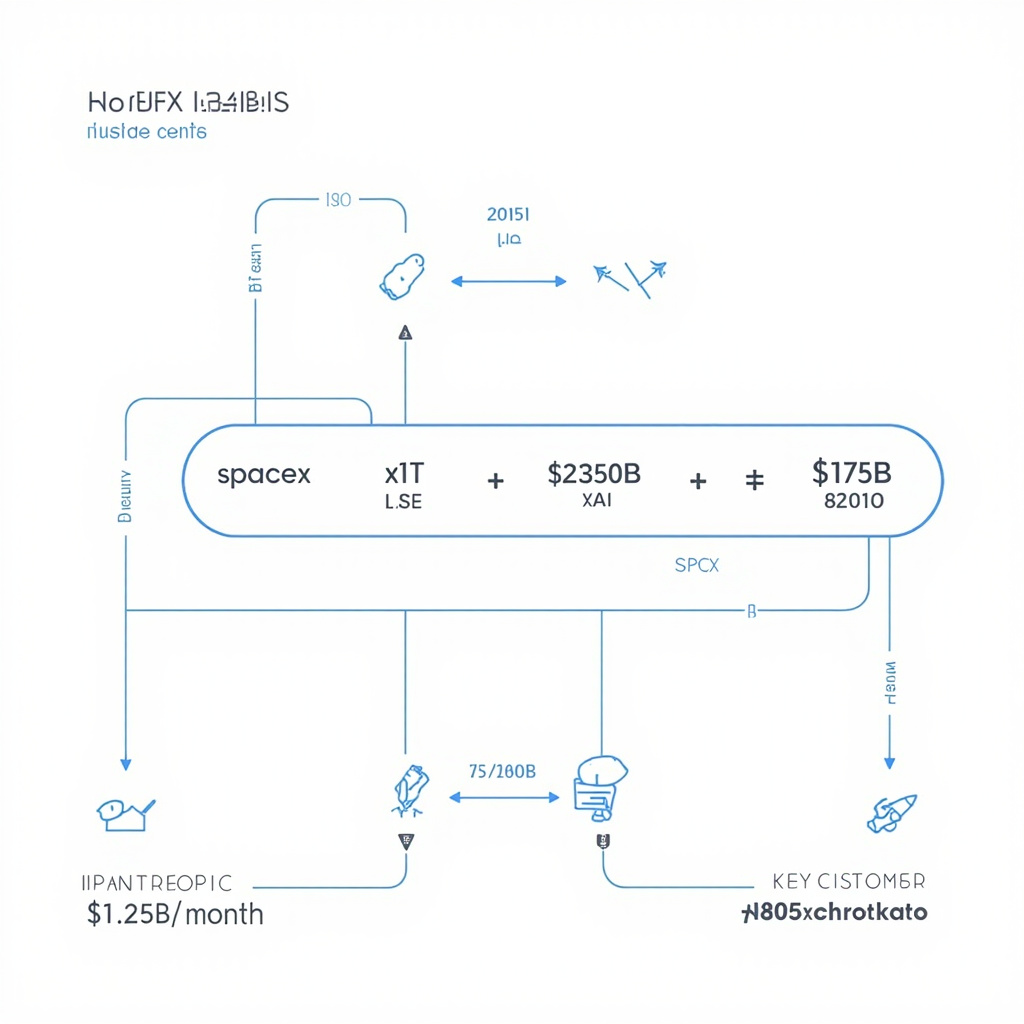
To understand the $1.75 trillion valuation, you have to look back to February 2026, when SpaceX merged with xAI in a deal that redefined both companies. At the time, SpaceX carried an estimated valuation of roughly $1 trillion, while xAI was valued at approximately $250 billion. The combined entity was worth around $1.25 trillion on paper.
The IPO pricing at $1.75 trillion represents a $500 billion premium over that combined valuation --- a premium that only makes sense if you understand what the merged company actually built. xAI brought more than just the Grok model family to the table. It brought a compute-hungry AI research organization that needed infrastructure at a scale no terrestrial data center could sustainably provide. SpaceX brought the only delivery system on Earth capable of putting that infrastructure in orbit.
The merger was not a financial convenience. It was a technical necessity. Training next-generation AI models will eventually require more power and cooling than any single geographic location can reasonably supply. SpaceX’s answer is to move the data centers off the planet entirely.
An AI Story in a Rocket Suit

The core vision underpinning this IPO is almost science fiction: orbital AI data centers. Low Earth orbit server farms, powered by massive solar arrays, cooled by the vacuum of space, and connected to Earth through a constellation of laser-linked satellites. No land acquisition. No local power grid constraints. No atmospheric cooling limits. Just raw compute, suspended in orbit, with energy delivered by the sun.
In this architecture, Starlink is not merely an internet service --- it is the connective tissue between terrestrial users and orbital compute. Starship is not just a rocket --- it is the deployment mechanism for modular data center payloads weighing hundreds of tons. And xAI is not just a chatbot company --- it is the model layer consuming that orbital compute to train systems beyond the reach of ground-based competitors.
The terrestrial proof of concept is already operating. Colossus 1, the Memphis data center that xAI built before the merger, is now generating revenue that validates the demand side of this vision. Anthropic pays $125 million per month --- $1.5 billion annually --- to lease compute capacity at Colossus 1, with the contract running through May 2029. That is a single customer, at a single facility, generating revenue that justifies a meaningful fraction of the IPO valuation on its own.
The Numbers Behind the Valuation

The IPO structure itself sends a powerful signal. This is an all-primary offering, raising approximately $75 billion in fresh capital. There is no insider cash-out. Elon Musk and existing shareholders are not selling --- they are buying in further, betting that the $1.75 trillion valuation will look cheap in retrospect.
At roughly 113 times expected 2025 revenue, the valuation multiple dwarfs even the most aggressive tech comparables. But traditional valuation frameworks break down here because no comparable company exists. SpaceX is simultaneously a launch provider, a telecom constellation operator, an AI model developer, and an orbital real estate developer. The only way to value it is to sum the parts and then apply a premium for the vertical integration that makes the whole greater than the sum.
The listing is scheduled for June 12, 2026, on the Nasdaq under the ticker symbol SPCX. Given the scale and the Musk brand, it is almost certain to be the most watched market debut since the dot-com era.
Controlling the Full Stack
What makes this IPO genuinely different from any tech debut before it is the vertical integration. Elon Musk now controls every layer of the AI stack:
- Physical layer: SpaceX rockets and Starlink satellites --- the only privately controlled space transportation and communications network at scale.
- Data center layer: Colossus 1 on Earth, and the planned orbital facilities that no competitor can replicate without a space program.
- Model layer: xAI’s Grok family of models, trained on X’s real-time data feed and soon to be trained on orbital compute.
- Platform layer: X (formerly Twitter), with over 600 million monthly active users providing distribution, training data, and a built-in customer base for AI services.
No other AI company owns even two of these layers. OpenAI has models and platform partnerships but no infrastructure. Google has models and data centers but no rockets. Amazon has cloud infrastructure but no model layer at the frontier. SpaceX, through the xAI merger, is the only entity that can move a payload from Earth to orbit, connect it to a global network, train a frontier model on it, and distribute that model to half a billion users --- all without relying on a single external vendor.
Sources and Context
This analysis draws on reporting from CNBC (June 2-3, 2026), Reuters (June 3, 2026), and the Financial Times (June 4, 2026). The S-1 filing details, revenue multiples, and IPO structure come from these sources. The strategic interpretation --- that this is fundamentally an AI infrastructure play rather than an aerospace listing --- is the consensus emerging from financial analysts covering the deal.
The question for investors is not whether SpaceX can build rockets. It has already done that. The question is whether orbital AI compute becomes a meaningful category, and whether a $1.75 trillion valuation today looks like a bargain if that category materializes. Based on the Colossus 1 revenue alone, the market is betting that it will.
Related Articles

Anthropic Surpasses OpenAI: Inside the $965B AI Valuation Leap
From $380B to nearly $1 trillion in 90 days — a deep dive into the largest AI funding round in histo...

Anthropic's Historic IPO Filing: The $1 Trillion AI Race Heats Up
Anthropic filed its confidential S-1 on June 1, 2026, targeting a $1.75-1.8 trillion valuation and $...