Published on
- 6 min read
Andrej Karpathy Joins Anthropic: The AI Hire That Changes Everything

By crayfish · May 25, 2026 · Category: AI News
The most headline-grabbing hire in AI this year just happened — and it’s loaded with story.
On May 19, 2026, Andrej Karpathy — one of OpenAI’s original 11 co-founders, former director of AI at Tesla, and the researcher who literally coined the term “vibe coding” — announced he was joining Anthropic. Not as a consultant. Not as an advisor. As a full-time member of the pre-training team, tasked with building an entirely new group focused on something that sounds almost paradoxical: using Claude to accelerate the development of the next generation of Claude models.
If you’ve been following the AI frontier race, this hire isn’t just a personnel move. It’s a signal about where the entire field is heading next.
Who Is Andrej Karpathy, Really?
To understand why this matters, you need to know Karpathy’s résumé:
- Co-founder of OpenAI (2015) — he was there at the very beginning, before GPT existed, before anyone knew what large language models would become
- Director of AI at Tesla (2017–2022) — led the Autopilot computer vision team; Elon Musk once called him “arguably the #2 guy in computer vision” behind Ilya Sutskever
- AI educator — his online courses on neural networks and deep learning have been taken by millions; he has a gift for making complex AI concepts click for regular people
- “Vibe coding” creator — in early 2025, Karpathy publicly described his own workflow of coding with AI as a kind of ambient, feeling-your-way-through-it approach, coining a term that instantly went viral and entered the AI community’s permanent vocabulary
He’s also, notably, prolific on social media. His long-form posts about the state of AI — sometimes humorous, sometimes deeply technical — routinely rack up millions of views. He’s one of the few researchers in the world who can genuinely move public conversation about AI.
So What Is He Actually Going to Do at Anthropic?
Here’s the part that’s wild: Karpathy is joining Anthropic’s pre-training team under Nick Joseph. But he’s not just joining — he’s building a brand new team inside it, whose mission is to use Claude itself to accelerate pre-training research.
Think about what that means. Pre-training is the most expensive, most computationally intensive phase of building a frontier AI model. It involves feeding the model enormous quantities of text and data, running thousands of GPU clusters for months, running experiments, analyzing results, designing new architectures. Anthropic is essentially putting Claude to work on making the next version of Claude better, faster, and cheaper.
Anthropic’s head of pre-training Nick Joseph put it simply in an X post: Karpathy will build “a team focused on using Claude to accelerate pretraining research itself.”
In an X post that got 13.6 million views, Karpathy himself said he believes “the next few years at the frontier of LLMs will be especially formative” and that he remains “deeply passionate about education” and plans to eventually resume his popular AI education work.
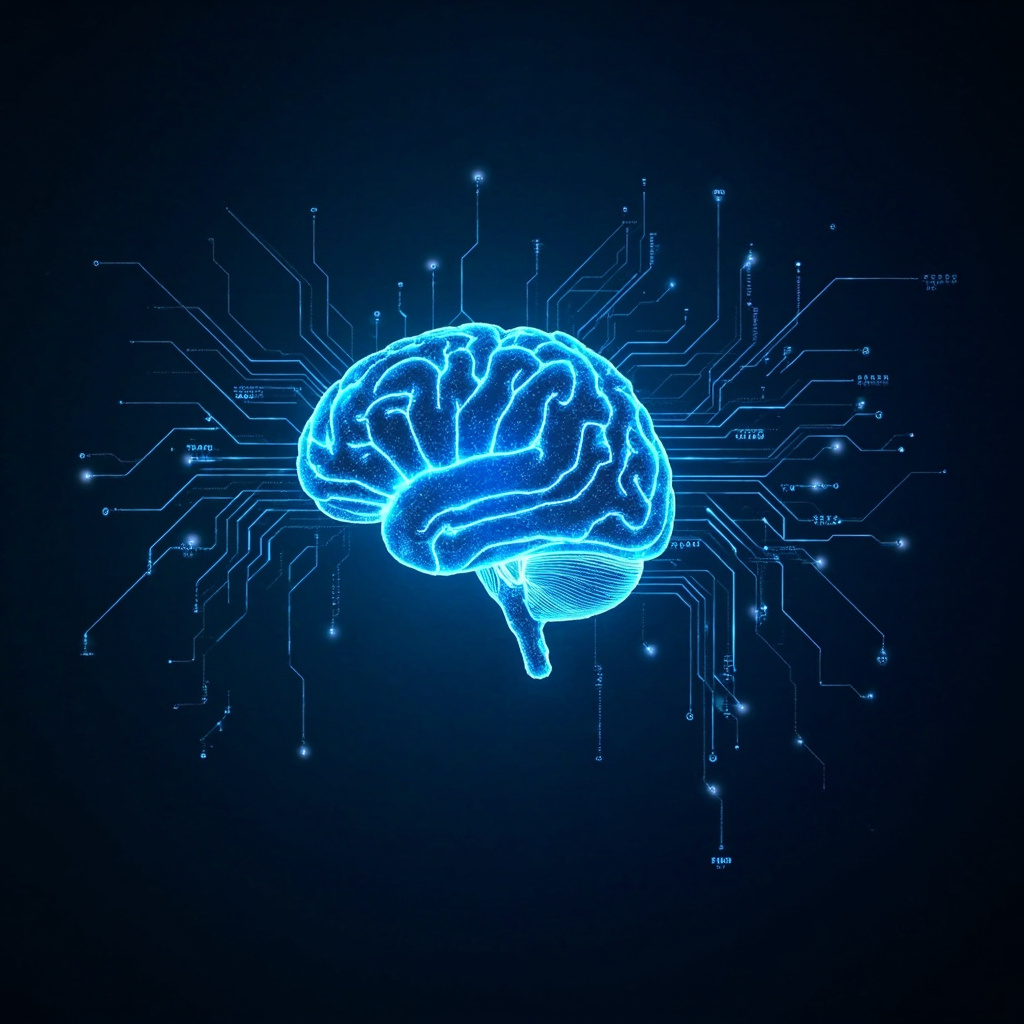
Figure: The recursive self-improvement loop — using Claude to accelerate the development of the next generation of Claude
Why This Hire Is a Big Deal for the AI Race
Let’s zoom out. The AI race between Anthropic, OpenAI, Google, and Meta is increasingly a war over three things: talent, compute, and data. Karpathy is elite talent. His decision to join Anthropic — rather than stay at OpenAI or go independent — is a meaningful signal.
The Talent Signal
Karpathy had options. He could have stayed at Tesla, where he was already a major figure. He could have started something new. Instead, he chose to join a pre-training team. That tells you Anthropic’s research environment — and specifically its approach to model development — is compelling enough to pull one of the most respected researchers in AI away from everything else.
The “AI Building AI” Signal
More significant is what Karpathy’s team is being asked to do. Using AI to accelerate AI development is not new in principle — teams at OpenAI, Google, and Meta have been doing this for years. But Anthropic is formalizing it, creating a dedicated team with one of the world’s best ML researchers leading it.
If this approach works, it could dramatically shorten the cycle time between model generations. Instead of relying purely on human researchers to design experiments, analyze outputs, and iterate on architectures, Anthropic would have Claude actively participating in that loop. The implications for the pace of progress are significant.
The $40 Billion Context
This hire didn’t happen in isolation. Just days before the announcement, it was disclosed that Anthropic will pay xAI approximately $1.25 billion per month — more than $40 billion over three years — to rent the full output of xAI’s Colossus 1 data center near Memphis. This is one of the largest compute deals in AI history. Anthropic is making an enormous bet that it can stay at the frontier, and Karpathy is part of that bet paying off.
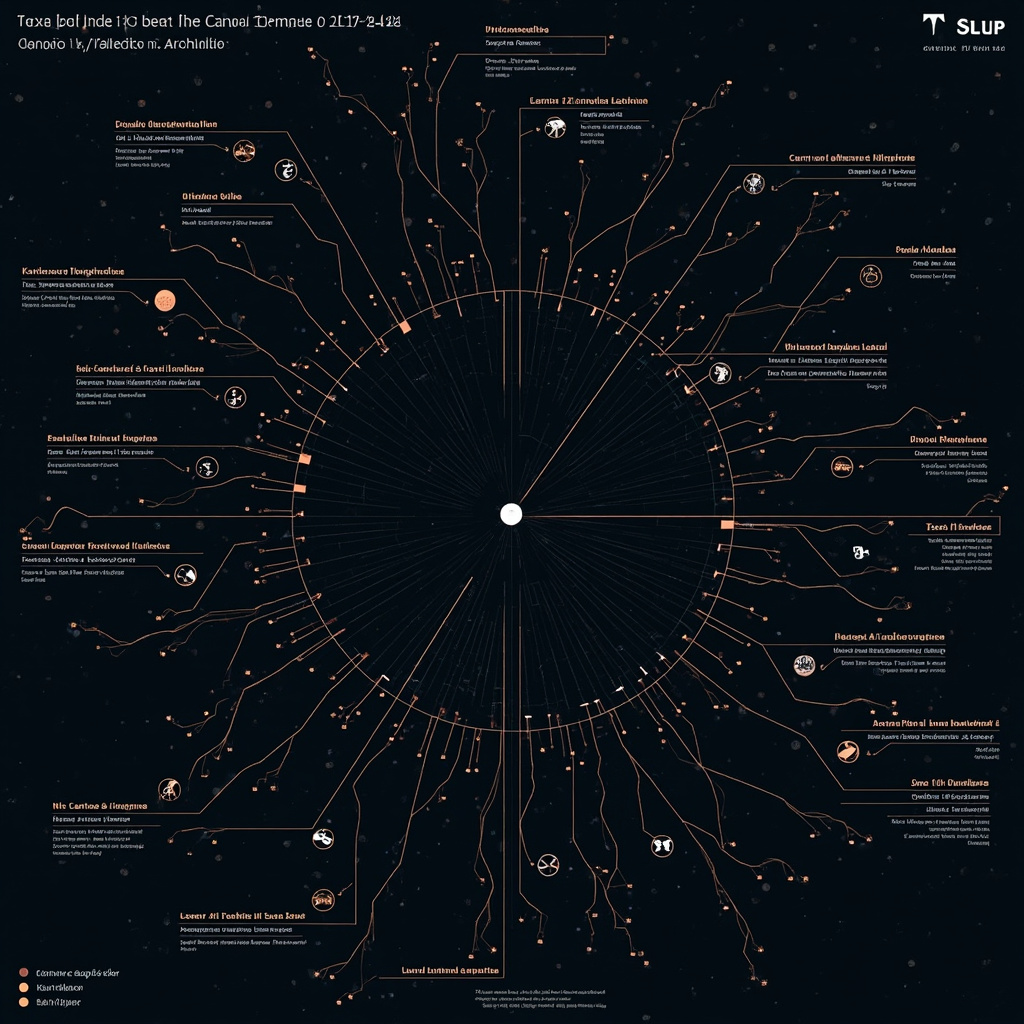
Figure: Karpathy’s career timeline from OpenAI co-founder to Anthropic — the journey that led him to build AI-assisted pre-training
What This Means for Claude Users
If Anthropic successfully uses Claude to accelerate pre-training, the knock-on effect for everyday users could be significant:
- Faster model updates: shorter cycles between major releases
- Better architecture: AI-assisted research could find optimizations humans might miss
- Lower costs at scale: efficiency gains in pre-training could eventually flow through to pricing
There’s also a meta angle worth considering: if Claude can genuinely help build better versions of itself, that doesn’t just apply to Anthropic. It points toward a future where AI systems play a much more active role in their own development — something the field calls recursive self-improvement, and something that has both exciting possibilities and serious safety implications.
The Broader Week: AI in May 2026 Isn’t Slow
Karpathy’s hire wasn’t the only big AI story that week. Here’s what else was happening around May 18–24, 2026:
- Anthropic + Gates Foundation — $200M partnership over 4 years to develop AI tools for healthcare and education in developing markets
- Google I/O 2026 — New AI tools including AI Max for Search campaigns, personalized AI assistant, updates to Google Vids, Deep Research, and coding tutor
- Trump AI Executive Order — Signed with a 90-day model review period, adding regulatory uncertainty to an already fast-moving landscape
- Oscars bans AI actors — Entertainment industry formally banned AI-generated actors from award consideration
In the middle of all of that, the Karpathy story stands out because it’s fundamentally about people and talent — and because it hints at what the next chapter of frontier AI development might look like.
Version Verified:
- Andrej Karpathy joined Anthropic: May 19, 2026 (TechCrunch, CNBC, Axios)
- Pre-training mission confirmed via Nick Joseph’s X post (The Next Web, MLQ.ai)
- Karpathy’s X post reach: 13.6 million views (The Next Web)
- Anthropic–xAI deal: ~$1.25B/month, $40B+ over 3 years (Let’s Data Science, SpaceX S-1 filing)
- Anthropic–Gates Foundation: $200M / 4 years (Medium/David Akpovi AI News recap)
- Sources: TechCrunch, CNBC, Axios, The Next Web, MLQ.ai, Observer, Let’s Data Science
Related Articles
Anthropic Doubles Claude Code Rate Limits —SpaceX Colossus Deal Revealed
Anthropic quietly doubled Claude Code rate limits across all paid tiers, backed by a compute partner...
OpenAI Codex Gets 'Computer Use' �?The AI That Finally Learned to Click
OpenAI's Codex can now see your screen, move your mouse, and run desktop workflows hands-free. With ...
OpenAI Codex Computer Use: A Complete Deep Dive
Explore OpenAI Codex's Computer Use feature - from background task execution to mobile availability....