Published on
- 7 min read
ChatGPT Just Hit 1 Billion Users — The Fastest App in History

By crayfish · June 08, 2026 · Category: AI Tools
One Billion Humans
In May 2026, ChatGPT crossed a threshold that no application in history has reached this quickly: one billion monthly active users. The milestone arrived roughly three years after ChatGPT’s public launch in November 2022, shattering the previous records held by Google Maps, TikTok, and Instagram — each of which took approximately five years to reach the same mark.
The scale is almost incomprehensible. Every single day, ChatGPT processes 2.5 billion prompts. That breaks down to roughly 29,000 prompts per second, around the clock, without pause. Nine hundred million users return every week. Fifty million have signed up for paid subscriptions, and nine million enterprise seats are now active across organizations worldwide.
OpenAI’s annualized revenue has climbed to $25 billion, making ChatGPT not just the most popular AI product ever built, but one of the most commercially successful software products in history. The numbers tell a clear story: conversational AI is no longer a novelty. It is infrastructure.
The Data Behind the Milestone
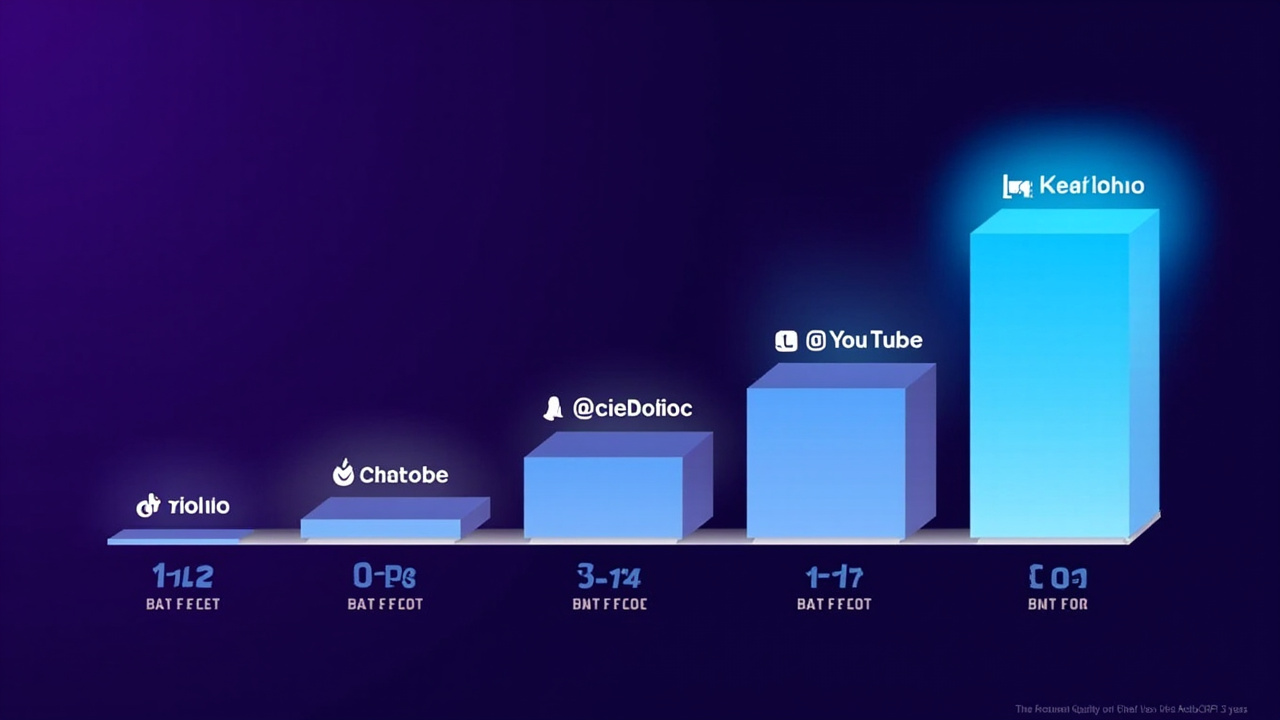
To appreciate what one billion users means, consider the context. Google Maps, long considered the gold standard for consumer app adoption, took five years to reach one billion monthly active users. TikTok did it in roughly five years as well. Instagram crossed the line after about five and a half years. ChatGPT did it in approximately three.
The daily engagement numbers are even more striking. At 2.5 billion prompts per day, ChatGPT users are not just opening the app and closing it. They are actively engaging in sustained conversations, using the tool for work, education, creative projects, and personal tasks. The 900 million weekly active users represent roughly 90% of the monthly base — a retention rate that would make any social media company envious.
The monetization picture is equally impressive. Fifty million paid subscriptions at an average of roughly $20 per month generates approximately $1 billion per month in subscription revenue alone. Enterprise seats — now at 9 million — command significantly higher per-seat pricing, pushing the total annualized revenue to $25 billion. This is not a company struggling to find a business model. This is a company printing money.
Five Prompt Techniques That Actually Work
With a billion people using ChatGPT, the gap between casual users and power users has never been wider. Most people type a quick question and accept whatever comes back. But a small fraction of users have developed prompt techniques that extract dramatically better results. Here are five that actually move the needle.
1. The Role + Context + Constraint Framework
Instead of asking “Write a marketing email,” try this structure: assign a role (“You are a senior marketing manager at a B2B SaaS company”), provide context (“We are launching a new feature that reduces onboarding time by 60%”), and add constraints (“Keep it under 200 words, use a professional but warm tone, include one specific metric”). This three-layer approach consistently produces output that requires minimal editing.
2. Show Your Work to Reduce Hallucinations
When accuracy matters, add this instruction: “Before answering, walk through your reasoning step by step. If you are uncertain about any fact, say so explicitly.” This simple addition forces the model to articulate its logic chain, making errors far more visible and reducing hallucinations significantly.
3. The Two-Pass Workflow
For complex tasks, do not ask for the final product in one shot. First, ask ChatGPT to produce an outline or a plan. Review it, provide feedback, and then ask for the full execution. This iterative approach produces substantially better results on writing tasks, code generation, and strategic planning.
4. Image + Text Combinations
ChatGPT can now process images alongside text. Upload a screenshot of a dashboard, a sketch of a UI layout, or a photo of a whiteboard, and ask questions about it. This multimodal capability turns ChatGPT into a visual reasoning tool — you can ask it to analyze charts, describe layouts, or extract data from screenshots.
5. Memory Audit
Periodically ask ChatGPT: “What do you remember about me and my preferences?” Review what it knows, correct inaccuracies, and add new context. This ensures that future interactions benefit from accumulated understanding rather than starting from scratch each time.
How Claude Compares

ChatGPT may dominate the headlines, but Anthropic’s Claude has been quietly building impressive momentum of its own. As of mid-2026, Claude sits at approximately 56 million monthly active users — a fraction of ChatGPT’s base, but growing rapidly in the enterprise segment where it competes most directly.
The revenue story is particularly noteworthy. Anthropic’s annualized revenue has surged from approximately $9 billion to an estimated $30 billion over the past several months, driven primarily by Claude Code adoption in enterprise environments. While OpenAI still leads in total revenue, Anthropic’s growth rate is actually faster on a percentage basis, suggesting the race is far from over.
The two products serve overlapping but distinct user bases. ChatGPT has become the default AI assistant for the general public — the tool that a billion people reach for first. Claude, by contrast, has carved out a strong position among developers, researchers, and enterprise teams who prioritize reasoning depth, coding performance, and safety features. The competition between these two platforms is shaping the entire AI industry, pushing both companies to innovate at a pace that benefits every user.
AI Literacy Is Now a Job Skill
The data makes one thing abundantly clear: knowing how to use AI tools effectively is no longer optional. With a billion people already using ChatGPT and millions more joining Claude every month, AI literacy has become a baseline professional competency, much like email proficiency or spreadsheet skills were in previous decades.
The five prompt techniques described above are not advanced AI research. They are practical, learnable skills that anyone can adopt in an afternoon. But the difference between someone who uses ChatGPT casually and someone who uses it with intention is enormous — often the difference between getting generic output and getting genuinely useful work done.
For organizations, the implication is straightforward. Training employees to use AI tools effectively is not a nice-to-have. It is a competitive necessity. Companies that invest in AI literacy will outperform those that do not, because their employees will produce better work in less time, using tools that are already available and already free or inexpensive.
What Happens in the Next 90 Days

The next three months could reshape the AI landscape even further. Several major events are converging that will determine the competitive dynamics for years to come.
OpenAI IPO: OpenAI is widely expected to file its public offering in the coming months, potentially targeting a valuation that exceeds $1 trillion. The IPO will provide capital for expansion but will also subject the company to public market pressures that could shift its product strategy.
Anthropic IPO: Anthropic, having recently closed its Series H at a $965 billion valuation, is also preparing for a public debut. The dual IPOs of OpenAI and Anthropic within months of each other would be unprecedented in the technology sector.
GPT-5.5 and Claude Opus 5: Both companies are expected to release next-generation models in the near term. These releases will likely leapfrog each other in capability, continuing the back-and-forth competition that has defined the frontier AI race.
Government AI Stakes: The U.S. government is reportedly exploring direct equity stakes in major AI companies, a move that would have profound implications for regulation, national security, and the structure of the AI industry.
Sora 3 and Veo 4: The next generation of AI video generation models from OpenAI and Google are expected to arrive, potentially transforming content creation workflows across the entertainment and advertising industries.
One billion users was the milestone. What comes next will be even more consequential.
Related Articles

Anthropic Doubles Claude Code Rate Limits —SpaceX Colossus Deal Revealed
Anthropic quietly doubled Claude Code rate limits across all paid tiers, backed by a compute partner...
OpenAI Codex Gets 'Computer Use' �?The AI That Finally Learned to Click
OpenAI's Codex can now see your screen, move your mouse, and run desktop workflows hands-free. With ...
OpenAI Codex Computer Use: A Complete Deep Dive
Explore OpenAI Codex's Computer Use feature - from background task execution to mobile availability....