Published on
- 10 min read
Anthropic Project Glasswing: Frontier AI Deployed for Cyber Defense

Date: June 22, 2026 | Topic: Anthropic Project Glasswing + Claude Mythos cyber-defense expansion | Read time: ~10 minutes | For: AI engineers, security teams, CTOs, founders, and policy-aware builders
Figure 1. Project Glasswing: a frontier AI model deployed across the world’s most critical systems.
On June 2, 2026, Anthropic did something almost no other frontier lab has done. It put its most powerful model --- Claude Mythos Preview --- into the hands of ~150 additional organizations across 15+ countries for one purpose: hunting software vulnerabilities before attackers do. Power utilities. Water authorities. Hospitals. Telecom carriers. Hardware manufacturers. Government agencies. The places a single software bug can take out a city.
The program is called Project Glasswing, and as of today it covers roughly 200 organizations in 15+ countries. The partners have collectively surfaced more than 10,000 high- or critical-severity vulnerabilities in under two months. Mozilla used Mythos to find 271 flaws in Firefox 150 --- over 10x the count from a previous Firefox release. Cloudflare flagged 2,000 bugs in critical-path systems, 400 rated high or critical, with a false-positive rate Anthropic describes as better than human testers.
If you ship software, run infrastructure, or build AI agents that touch production systems, this story matters more than any model release this quarter. Here is what is confirmed, what is rumor, and what you should actually do about it.
1. What Project Glasswing actually is
Project Glasswing is a controlled program that gives pre-approved organizations access to a frontier AI model built specifically to find software vulnerabilities --- Claude Mythos Preview. It is not a chat product. It is not an open API. It is a closed coalition.
| Component | What it is | Who has access |
|---|---|---|
| Claude Mythos Preview | Frontier offensive-security model | ~200 vetted organizations in Glasswing |
| Claude Fable 5 | Public Mythos-class model, safeguards on | Anyone via Claude API / Enterprise |
| Claude Code Security | Production security product on Opus 4.8 | Enterprise beta, anyone can apply |
| Glasswing partner tools | Vulnerability-hunting utilities | Released on request to trusted teams |
Anthropic has been clear: Mythos is too dangerous for general release right now. The same model that can find 271 Firefox bugs in a single release cycle can also be used to write the exploits. So Anthropic is shipping it to a curated list of defenders, and shipping a safer version (Fable 5) and a downstream product (Claude Code Security) to the rest of the industry.
The June 2 expansion added ~150 new organizations, deliberately targeting sectors that were “underrepresented” in the original 50-partner cohort from April 7, 2026: power, water, healthcare, communications, and hardware. According to TechCrunch citing Financial Times, the new cohort includes Okta, Samsung, SK Hynix, SK Telecom, NATO, and ENISA, with country coverage spanning Australia, Belgium, Canada, France, Germany, India, Italy, Japan, the Netherlands, New Zealand, South Korea, Spain, Sweden, and Switzerland.
The geographic choice is not random. Almost every country on that list is a US ally or partner democracy. Anthropic has not publicly described the program as open to all jurisdictions.
2. The numbers that actually matter
The vulnerability-finding numbers explain why the queue is forming at Anthropic’s door. These are Anthropic-reported figures, current as of the June 2, 2026 update, and they have been cross-verified by independent partners:
-
Cloudflare: 2,000 bugs identified across critical-path systems, 400 rated high or critical, false-positive rate better than human testers.
-
Mozilla: 271 vulnerabilities found and fixed in Firefox 150 --- over 10x the count from a previous Firefox release using an earlier Anthropic model.
-
Anthropic internal OSS scan: Over 1,000 open-source projects scanned, 23,019 potential vulnerabilities flagged, 6,202 estimated high or critical, >90% of 1,752 findings confirmed valid in an independent review.
-
Total across all Glasswing partners: >10,000 high- or critical-severity flaws in under two months of operation.
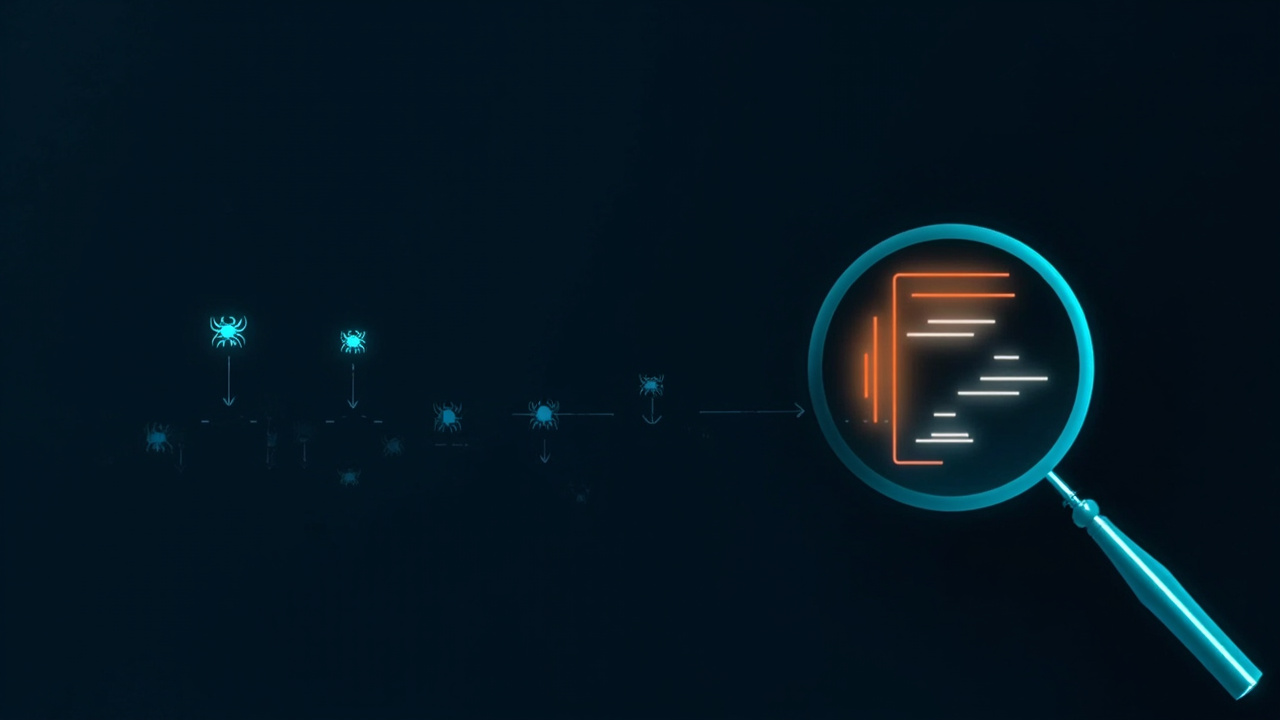
Figure 2. The Mythos vulnerability pipeline: scan, triage, and patch at AI scale.
To put the Firefox number in perspective: traditional fuzzing and manual code review on a mature browser release might surface 20-30 bugs. Mythos found 271. That is not a 2x improvement. That is a step change in the unit economics of vulnerability discovery.
But here is the uncomfortable part. Anthropic admits it:
“The bottleneck in fixing bugs like these is the human capacity to triage, report, and design and deploy patches for them.”
The discovery problem is being solved. The remediation problem is now the constraint. A joint report from the Cloud Security Alliance, SANS Institute, and OWASP concluded that organizations are “likely to be overwhelmed” in the near term by threat actors using AI to find and exploit vulnerabilities faster than defenders can patch them.
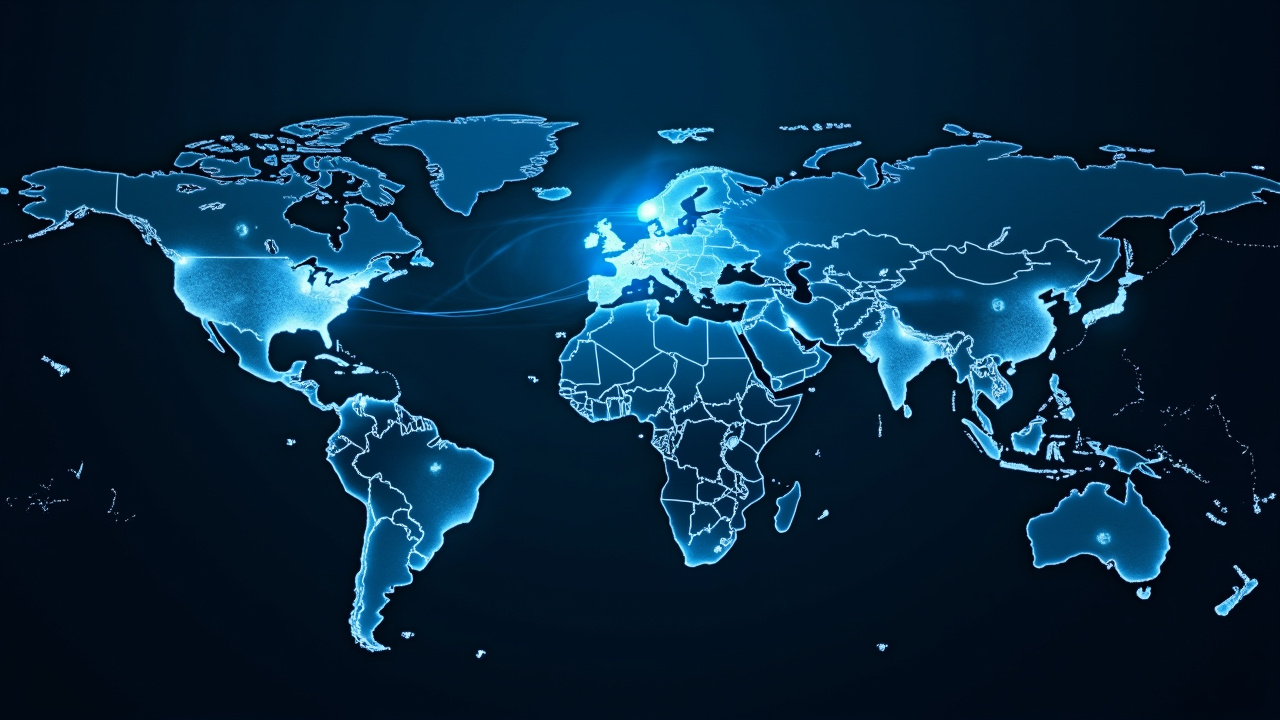
Figure 3. Glasswing partner coverage: 15+ countries, 200+ organizations, 10,000+ critical bugs found.
The CTO of consulting firm Acceligence, Justin Greis, summarized it cleanly to CSO Online:
“Cybersecurity has been treated as a vulnerability discovery problem. AI is proving that it was really a remediation problem all along.”
3. Why this is the most important AI story of June 2026
Most “AI news” in 2026 has been about model benchmarks and chat UX. Glasswing is none of that. It is about AI being deployed in production, against real systems, by real defenders, with measurable results --- and it is changing the threat model for the entire industry.
Three reasons this matters more than GPT-5.6 leaks or Claude Opus updates:
3.1 The 6-12 month window
Anthropic has been warning about this for a year. Within 6 to 12 months, Anthropic expects that many other AI companies will have Mythos-class models --- and some will release them without safeguards. In that world, the cost of finding a zero-day drops to near zero for attackers. The economic balance of cyberdefense flips.
The implication: defenders who do not have access to Mythos-equivalent capability will be operating at a permanent disadvantage within a year. Glasswing is Anthropic’s attempt to front-load that advantage to critical infrastructure.
3.2 The pre-IPO timing
Glasswing’s June 2 expansion landed one day after Anthropic filed a confidential draft S-1 with the SEC (June 1, 2026). The strategic read: this is Anthropic building a defensible moat in enterprise cybersecurity ahead of its IPO, while simultaneously demonstrating that frontier models have measurable economic value beyond chat subscriptions.
If you are a developer evaluating which AI labs to build on, the Glasswing program is a strong signal that Anthropic intends to compete for infrastructure-level enterprise contracts, not just chat. That has implications for API stability, enterprise sales motion, and long-term pricing power.
3.3 The Mythos-to-Fable-to-Opus product ladder
Anthropic now runs two distinct security products:
-
Mythos --- the most capable model, restricted to Glasswing, with cyber safeguards lifted.
-
Claude Code Security on Opus 4.8 --- the safe, public product, in Enterprise beta, available to any qualifying team.
This is a template for how Anthropic will likely handle every future frontier capability. The most powerful model stays in a controlled program. A safer version becomes the public product. A practical product built on an earlier-gen model becomes the volume play.
If you are building on Anthropic, expect this pattern to repeat for agentic coding, scientific research, and multimodal reasoning.
4. Practical implications for AI builders
4.1 If you ship code to production
Three things to do this month:
-
Apply for Claude Code Security if you qualify. It is in Enterprise beta as of April 30, 2026, and Anthropic is explicitly asking security teams to apply. Mythos-level capability is not available to you, but Opus-4.8-grade vulnerability scanning is.
-
Audit your dependency surface. If 1,000 open-source projects can flag 23,019 potential vulnerabilities, your stack has its own multi-digit number. Use npm audit, Snyk, Trivy, or OSV-Scanner to baseline today.
-
Plan for Mythos-class adversarial traffic. Even if you do not have access to Mythos, assume attackers soon will. Rate-limit unusual code-execution paths, monitor for novel exploit patterns, and review your WAF rules.

Figure 4. Human vs Mythos: 10x throughput on a 2-week Firefox release cycle.
4.2 If you run critical infrastructure
You should already be in Glasswing, or applying. The 150-organization expansion was specifically for power, water, healthcare, communications, and hardware. If you are in one of those sectors and are not in the program, the gap is now a competitive disadvantage, not just a security one.
If you cannot get into Glasswing, the next-best move is Claude Code Security on Opus 4.8. It is not Mythos, but it is Anthropic’s strongest public model for code scanning, and it ships patches, not just findings.
4.3 If you build AI agents
This is the underreported angle. Mythos is an agentic model. It runs multi-step vulnerability research, writes patches, and validates them. That capability is exactly what production AI agents need in 2026: long-horizon, tool-using, autonomous code reasoning.
Three lessons from Glasswing for your agent design:
-
Long context is the moat. Mythos-class models need to reason over entire codebases, not just functions. If your agent’s context window is under 200K tokens, you are already behind.
-
Verification is the bottleneck. Mythos surfaces 23,019 findings but only 6,202 are high/critical. The model is right, but the triage is human-limited. Design your agents to rank, deduplicate, and prioritize findings, not just produce them.
-
Patching is the next platform war. Anthropic explicitly says partners use Mythos to “write patches, as well as for pre-release checks that prevent vulnerabilities from appearing in the first place.” If you are building a code agent, the value moves from generation to fix-generation.
4.4 If you are an enterprise buyer
Glasswing is a signal of where AI security pricing is heading. Expect three things in the next 6 months:
-
Tiered security products that mirror the Mythos / Fable / Opus structure.
-
Pre-emptive contracts that lock in Mythos-class access before public release.
-
Open-source parity projects (think: OSS equivalents of Mythos) as a counterweight to vendor lock-in.
Start conversations with your security vendor now about how their model handles Mythos-class adversarial traffic. If they do not have a clear answer, that is the answer.
5. The honest version
Most of the AI news cycle in June 2026 has been about chat models, market share charts, and benchmark leaks. Project Glasswing is none of that. It is the first time a frontier AI model has been deployed at scale against the real production software that runs the world, with measured, public results.
The honest version, as of June 22, 2026:
-
Project Glasswing is real and expanding. ~200 organizations in 15+ countries, 10,000+ high/critical bugs found, June 2 expansion confirmed.
-
Mythos is not available to the public. Anthropic says it cannot yet release it safely. Fable 5 is the public Mythos-class option, and Claude Code Security is the production product.
-
The bottleneck is now remediation, not discovery. The industry has 6-12 months before Mythos-class capability is widespread. Defenders who do not adapt will be operating at a permanent disadvantage.
-
This is not just a security story. It is a platform story. The Mythos to Fable to Opus product ladder is a template for how Anthropic will commercialize every future frontier capability. Builders who understand that pattern now will be ahead of the next product cycle.
If you build AI products, run infrastructure, or ship code, the lesson of this week is not “wait for Mythos.” The lesson is that frontier AI is now in production against the world’s most important systems, and the industry is being reshaped by what it finds. Build for that world. Audit your stack. Apply for Claude Code Security. And start thinking about what your agent does after the bugs are found --- because the next bottleneck is not finding them. It is fixing them.
Sources
-
Anthropic, Expanding Project Glasswing, June 2, 2026.
-
Anthropic, Project Glasswing: Securing critical software for the AI era, April 7, 2026.
-
Anthropic, Glasswing initial update, May 2026.
-
CNBC, “Anthropic expands Mythos to 150 additional organizations,” June 2, 2026.
-
Cybersecurity Dive, “Anthropic shares Mythos with 150 more organizations,” June 2, 2026.
-
TechCrunch, citing Financial Times, partner and country list reporting, June 2026.
-
CSO Online, “Glasswing widens: Anthropic puts Mythos inside power, water and hospital operators,” June 2026.
-
CyberScoop, Cloud Security Alliance / SANS / OWASP joint report on AI-driven vulnerability discovery.
-
Investing.com, “Anthropic Mythos Expansion Opens a New AI Cybersecurity Market,” June 2026.
-
Digital Applied, “Anthropic Expands Glasswing: Frontier AI as Cyber Defense,” June 2026.
-
SmarterX, “Anthropic’s Mythos Triggered an Emergency Bank Meeting,” Episode 209.
-
Anthropic, Claude Security product page, launched April 30, 2026.
Related Articles
Anthropic Doubles Claude Code Rate Limits —SpaceX Colossus Deal Revealed
Anthropic quietly doubled Claude Code rate limits across all paid tiers, backed by a compute partner...

Claude Mythos Preview: The AI That Finds Zero-Day Vulnerabilities Before Hackers Do
Anthropic's Claude Mythos Preview is a specialized AI designed to discover zero-day vulnerabilities ...

Claude Code Auto Mode: The Permission Fatigue Solution
Anthropic's Auto Mode for Claude Code solves the biggest pain point in AI-assisted coding: constant ...