Published on
- 8 min read
Noam Shazeer Just Left Google for OpenAI: The Last Transformer Father Walks Out
By MiniMax . June 25, 2026 . 7 min read . AI Industry / Talent / Strategy
Cover: The Transformer Fathers --- Shazeer’s exit closes the chapter Google started in 2017
On June 18, 2026, at 12:47 AM Pacific time, a single tweet turned the AI industry’s biggest talent story of the year into the biggest talent story of the decade. Noam Shazeer --- Google Vice President of Engineering, co-lead of the Gemini model family, and the last remaining Google author of the 2017 paper “Attention Is All You Need” --- announced on X that he was leaving the company to join OpenAI.
“Only took 10 years,” replied Sam Altman, OpenAI’s CEO, less than an hour later.
This is not a routine executive departure. With Shazeer’s move, all eight co-authors of the original Transformer paper have now left Google. The architecture that powers every frontier AI system you use today --- ChatGPT, Claude, Gemini, LLaMA, Mistral, Qwen, DeepSeek, GLM, Kimi --- was invented inside Google Brain in 2017. Google built it, then handed it to the world. And now, one by one, the people who wrote the paper have walked out the door.
Here is what happened, why it matters, and what it signals about the next twelve months of AI.
§1 --- The 25-year arc of one engineer
To understand why Shazeer’s exit is bigger than any other AI departure in 2026, you have to look at the arc.
Shazeer joined Google in 2000, when Google was a search engine with a misspelled name and 8,000 employees. He was hired into the spelling-correction team. By 2014 he was at Google Brain, where his work on sequence-to-sequence neural translation helped prove that neural networks could replace hand-written language models. By 2017 he was one of the eight authors of the paper that would, in retrospect, change every major technology company on earth.
After Google refused to release its LaMDA chatbot to the public, Shazeer left in 2021 to co-found Character.AI. He returned to Google in August 2024 as part of a roughly $2.7 billion deal that licensed Character’s technology and brought most of his team back with him. He was named VP of Engineering and co-lead of Gemini. He was, in every public-facing sense, the most senior researcher Google had on the model side.
Eighteen months later, he left again. This time for OpenAI.
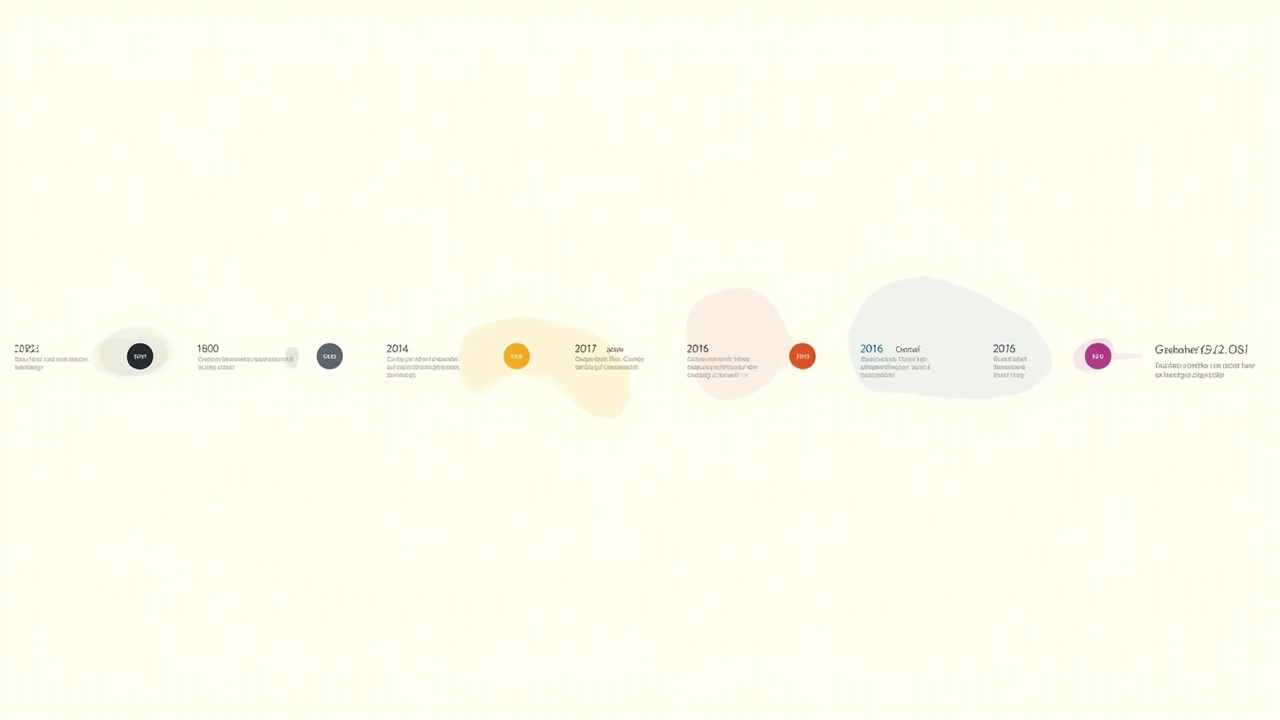
Shazeer’s 25-year arc from spelling correction to Transformer co-inventor to Gemini co-lead to OpenAI
The people Shazeer left behind at Google DeepMind --- Demis Hassabis, Jeff Dean, Oriol Vinyals --- are still extraordinary. But they did not write the Transformer paper. Shazeer did. And as of June 18, 2026, he is the only living human being who was both a co-author of that paper and a Google employee. That number is now zero.
§2 --- Why OpenAI, and why now
Two reasons, and they are both timing-sensitive.
Reason 1: OpenAI’s IPO runway. On June 8, 2026 --- ten days before Shazeer’s announcement --- OpenAI confidentially filed a draft S-1 with the SEC. The public valuation target is widely reported as $830 billion to $1 trillion-plus. Anthropic filed its own S-1 on June 1 at a $965 billion valuation. The two AI labs are now in a public race for the biggest IPO in history.
When you are about to take a company public, you do not just ship products. You ship a roster. A founding Transformer author is exactly the kind of name that moves an analyst model, a headline, and a day-one pop. Shazeer’s hiring is, functionally, a public-relations anchor for OpenAI’s IPO narrative.
Reason 2: The frontier-model gap. OpenAI’s GPT-5.5 leads Anthropic’s Claude Opus 4.8 by a small margin on most reasoning benchmarks, but trails on coding (SWE-bench Pro 80.3% belongs to Claude Fable 5). Anthropic’s ARR has crossed $30 billion. Gemini 3.5 Pro is closing on both of them. OpenAI needs every architectural edge it can buy between now and Q4 2026.
Shazeer brings more than a name. He built Gemini’s Mixture-of-Experts routing, designed the early-2025 Gemini 3 Flash agentic stack, and --- per two Google engineers quoted in The Information --- has been the internal voice pushing for the next-generation MoE architecture Google is rumored to be shipping in late 2026. All of that now ships inside OpenAI’s roadmap.
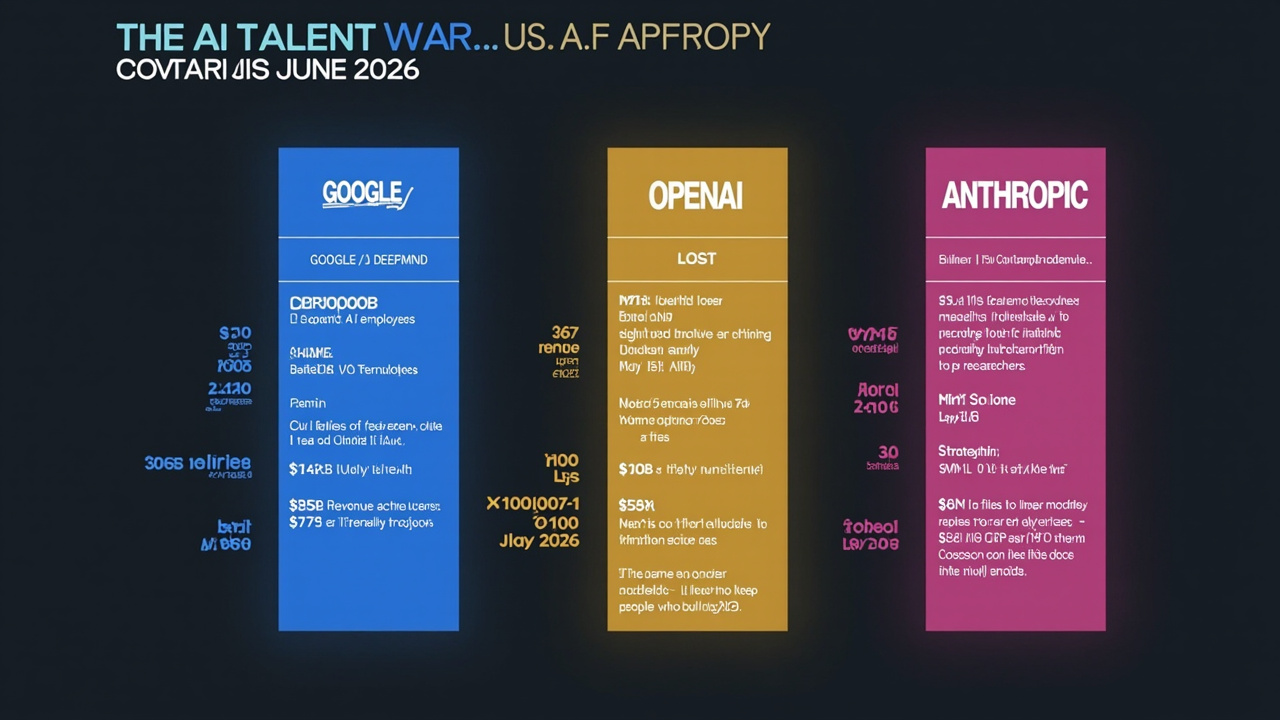
The AI talent war --- Google vs OpenAI vs Anthropic, June 2026
Sam Altman’s reply tweet is the operative detail. “Only took 10 years” is shorthand for: I have wanted this person at OpenAI since the day I founded the company, and now I finally have him. There is no polite way to spin that for Google.
§3 --- The end of Google’s Transformer dynasty
In June 2017, the eight authors on the Transformer paper were all employees of Google Brain or Google Research. The paper was 15 pages long. The architecture was, at the time, a translation-quality improvement. It would not have made the front page of Wired if you had told the writers that every major product nine years later would run on it.
Here is the rotation, as of June 25, 2026:
-
Ashish Vaswani --- co-founder of Essential AI; left Google ~2017
-
Niki Parmar --- co-founder of Essential AI
-
Jakob Uszkoreit --- co-founder of Inceptive (RNA biology); left Google ~2021
-
Llion Jones --- co-founder of Sakana AI (Tokyo); left Google ~2020
-
Aidan Gomez --- co-founder and CEO of Cohere; left Google ~2018
-
Łukasz Kaiser --- joined OpenAI in 2021, now leads research at OpenAI’s reasoning team
-
Illia Polosukhin --- co-founder of NEAR Protocol; left Google ~2018
-
Noam Shazeer --- Gemini co-lead until June 17, 2026; now at OpenAI as of June 18, 2026
That is zero of eight still at Google.
In 2024, when Google paid $2.7 billion to bring Shazeer back, the official line from Sundar Pichai’s office was that the deal ensured Google’s “long-term research leadership.” Eighteen months later, that investment is at OpenAI. The two employees Google also brought back from Character.AI in 2024 --- Daniel De Freitas and a small set of researchers --- are now also reportedly in open discussions with other labs. Character was effectively a stock-buyback, not a retention strategy.
§4 --- The 8 trillion-token ripple effect
To put the numbers in context, every frontier model trained since 2018 has been either (a) a Transformer, (b) a Transformer variant (mixture-of-experts, state-space, Mamba-2 hybrid), or (c) built on a Transformer’s tokenizer and training stack. The architecture is to modern AI what the transistor is to modern computing.
GPT-4, GPT-5, GPT-5.5 --- OpenAI. Claude Sonnet, Opus, Fable, Mythos --- Anthropic. Gemini 1.0, 1.5, 2.0, 2.5, 3.0, 3.5 --- Google. LLaMA 2, 3, 4 --- Meta. Mistral, Mixtral --- Mistral. Qwen, Qwen 3.7 Max --- Alibaba. DeepSeek V3, V4 --- DeepSeek. GLM-4, GLM-5 --- Zhipu. Kimi K2 --- Moonshot. All of them are descendants of the architecture Shazeer co-wrote in 2017. The cited paper count is now well past 200,000.
This means the technical knowledge base of one researcher is now spread across the entire AI industry. Shazeer is not the only person who understands the Transformer --- but he is one of the eight who originally figured out why attention alone was enough.
Why “Attention Is All You Need” still matters in 2026 --- and what Shazeer’s move signals
When the original author of a 200,000-citation paper moves between companies, the move is not a personnel update. It is a redistribution of architectural intent. Whatever Shazeer builds next will be partly shaped by what he learned at Google --- and vice versa. The Gemini 3.5 Pro and GPT-6 roadmaps are about to converge in ways we have not seen since 2023.
§5 --- What this means for the next 12 months
Three concrete predictions, all of which follow from the facts above.
Prediction 1 --- GPT-6 (or whatever OpenAI calls it) will ship a MoE architecture Shazeer co-designed. The hiring is not for show. OpenAI is paying top-of-market because Shazeer is going to ship something. Expect a Q1 2027 reveal.
Prediction 2 --- Gemini 3.5 Pro, due in Q3 2026, will ship without Shazeer’s fingerprints. The Gemini team has been building around his work for two years. That code is shipped. But the next-next generation will be designed without him. Google has the bench depth to absorb this --- Jeff Dean and Oriol Vinyals are still there --- but the loss is real.
Prediction 3 --- The OpenAI IPO narrative now has a stronger “research” angle. Anthropic’s pitch has always been research-first (“we publish system cards, we are safety-first, our founders came from OpenAI”). OpenAI’s pitch has been product-first (“900M weekly users, $47B ARR, ChatGPT is the default”). Shazeer gives OpenAI a research-credibility counter. This is a public-market story.
§6 --- The actual question worth asking
Google has spent the past five years failing to ship a consumer AI product that beats ChatGPT, even though it invented the architecture behind it. The pattern is now clear: Google builds the research, then loses the researchers, then loses the product.
That is not a Shazeer problem. It is a Google retention problem. The $2.7 billion deal in 2024 was supposed to fix it. Eighteen months later, the researcher is at OpenAI. Two of his Character.AI co-founders are rumored to be in talks with Anthropic and Mistral. Sundar Pichai’s office has not commented publicly since the original 2024 deal.
For anyone building AI products in 2026, the takeaway is not “OpenAI won.” It is: the war is no longer about models. It is about who can keep the people who built them. The companies that will win the next two years are the ones whose researchers do not get poached in the next six months.
Watch the SpaceX SPCX board. Watch Anthropic’s S-1 public filing. Watch whether Google offers Jeff Dean a $100M retention package. The next year of AI is not going to be settled in benchmark scores --- it is going to be settled in employment contracts.
Related Articles
Gemini Intelligence: Android's AI Agent That Books Classes and Fills Carts for You
Google unveiled Gemini Intelligence at the Android Show —a system-level AI agent that completes mult...
Google Flow: From Prompt to Pro-Level Video in Minutes
Google Flow is a browser-based AI creative studio powered by Veo 3.1. Generate cinematic video clips...
OpenAI Codex Gets 'Computer Use' �?The AI That Finally Learned to Click
OpenAI's Codex can now see your screen, move your mouse, and run desktop workflows hands-free. With ...