Published on
- 7 min read
Apple Just Paid Google $1 Billion to Rebuild Siri — WWDC 2026
By crayfish · June 08, 2026 · Category: AI Tools
The Deal That Redefined Siri
On January 12, 2026, Apple and Google jointly announced a partnership that sent shockwaves through the technology industry: Apple would rebuild Siri from the ground up using Google’s Gemini AI model, in a deal worth approximately $1 billion per year. At WWDC 2026, Apple showed the world what that rebuild looks like — and it is a fundamentally different Siri than anything Apple has shipped before.
The new Siri runs on a 1.2-trillion-parameter Mixture-of-Experts model, a custom variant of Google’s Gemini architecture that Apple has tailored specifically for on-device and cloud-hybrid inference. This is not Siri with a better language model bolted on. This is Siri replaced entirely by a frontier AI system, wrapped in Apple’s design language and privacy framework.
The partnership is remarkable for what it represents: Apple, the company famous for building everything in-house, acknowledged that its own AI efforts had fallen short and that Google’s model technology was simply better. The $1 billion annual price tag is significant, but for a company with 1.5 billion daily active iPhone users, it amounts to less than $0.07 per user per year — a trivial cost for what the deal delivers.
Privacy Architecture: Apple’s Cloud, Not Google’s
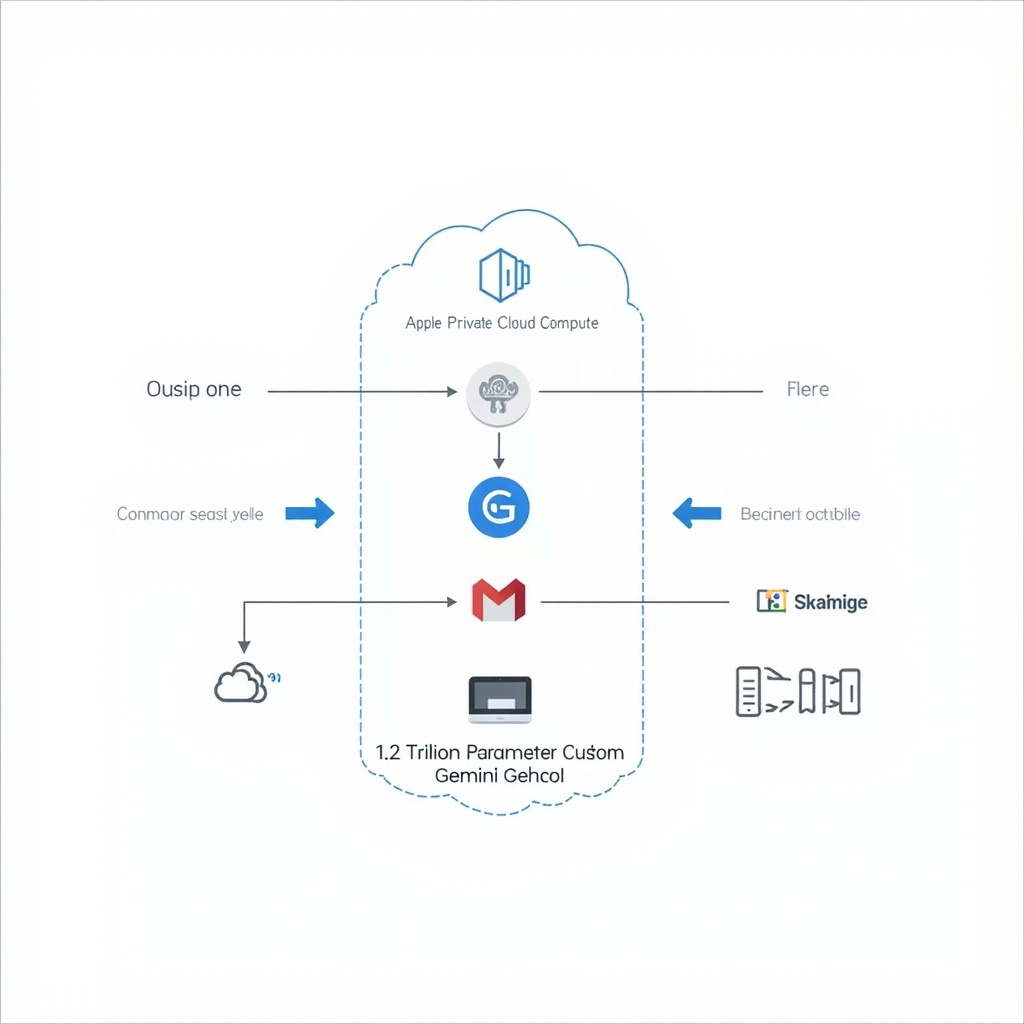
One of the most critical aspects of the Apple-Google Siri deal is the privacy architecture. Despite running on Google’s Gemini model, Siri requests never touch Google’s cloud infrastructure. The model runs entirely within Apple Private Cloud Compute (APCC), Apple’s own server infrastructure built on Apple Silicon.
Here is how it works: Google provided Apple with the model weights for the Gemini variant, and Apple deployed those weights on its own servers. When you ask Siri a question that requires cloud-level intelligence, the request travels from your iPhone to Apple’s data centers — never to Google’s. Apple processes the inference, returns the response, and discards the data. Google does not see your queries, does not log your interactions, and does not receive any user data from the arrangement.
This architectural decision was non-negotiable for Apple. The company has built its brand identity on privacy, and routing Siri queries through Google’s cloud would have been a PR catastrophe. By running the model in-house, Apple maintains the privacy narrative while still delivering Gemini-class intelligence.
For Google, the deal is still enormously valuable. The $1 billion in annual revenue is meaningful, but more importantly, the partnership legitimizes Gemini as a model platform that can power experiences at the largest consumer scale on Earth. Google Gemini is now the intelligence behind the world’s most popular smartphone assistant — a powerful positioning statement regardless of where the inference actually runs.
Siri 2.0: Five Features That Change Everything
WWDC 2026 showcased five major Siri 2.0 capabilities that represent the most significant upgrade to Apple’s assistant since its original introduction in 2011.
1. Standalone Chat App
Siri is no longer just a voice assistant triggered by “Hey Siri.” It now has its own dedicated app on the home screen — a full conversational interface where you can type or speak, maintain conversation history, and revisit previous interactions. The app feels like a purpose-built AI chat experience, not an afterthought bolted onto a voice trigger.
2. Dynamic Island Integration
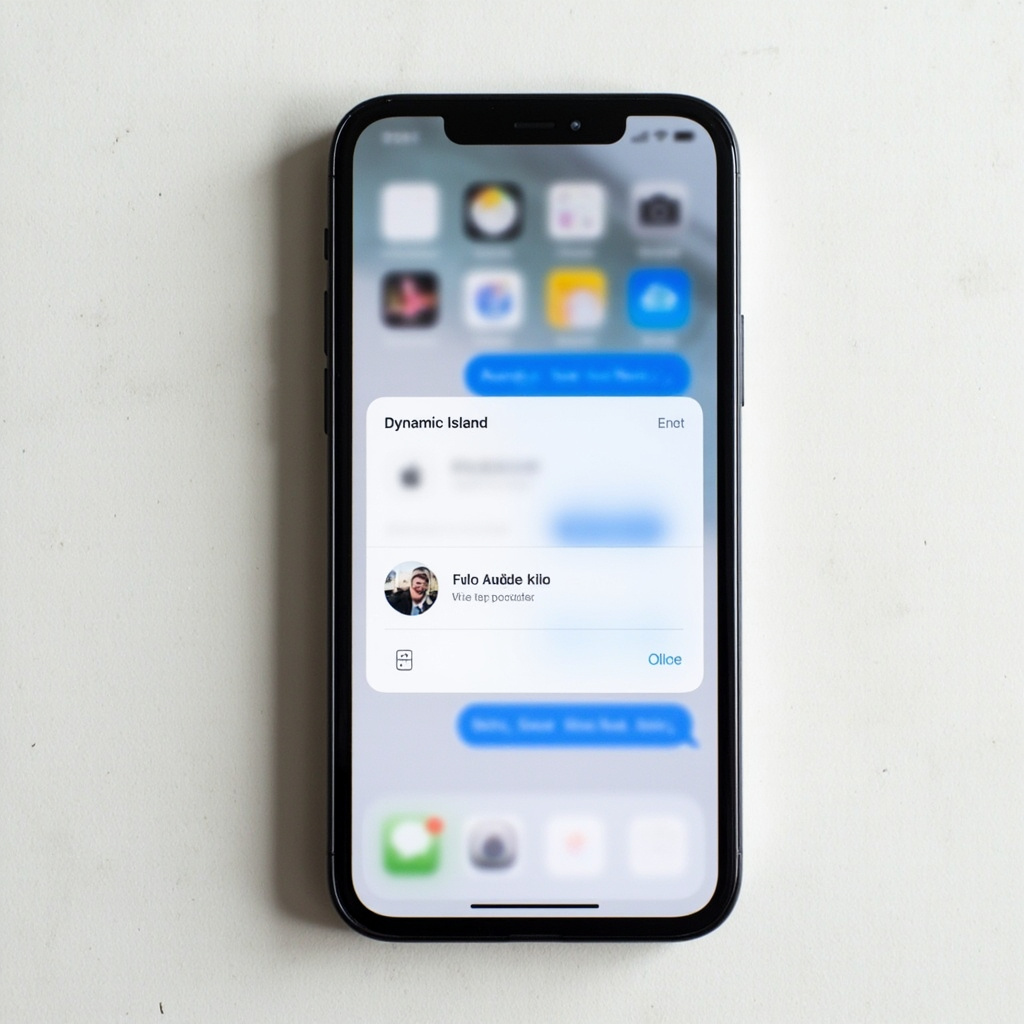
When you activate Siri, it now appears as a rich, interactive card in the Dynamic Island at the top of the screen. The card shows real-time transcription of your voice input, live progress on multi-step tasks, and quick-action buttons for common follow-ups. You can tap the card to expand it into a full-screen conversation without leaving your current app.
3. On-Screen Awareness
Siri 2.0 can see what is on your screen. If you are looking at an email and ask Siri to “summarize this,” it knows you mean the email. If you are in Maps and ask “how long to get there from here,” it understands the context without you specifying addresses. This on-screen awareness works across Apple’s first-party apps and, through Siri Extensions, with third-party apps as well.
4. Multi-Step Commands and Agentic Workflows
This is the capability that transforms Siri from a simple command executor into something closer to an AI agent. You can now give Siri complex, multi-step instructions like “Book a table for four at that Italian place we went to last month, add it to my calendar, and text Sarah the reservation details.” Siri breaks the request into subtasks, executes them sequentially, and confirms each step as it goes.
5. Siri Extensions: Choose Your AI
Perhaps the most surprising feature is Siri Extensions, a framework that allows third-party AI models to plug into Siri as alternative intelligence providers. Want Claude to handle your coding questions instead of Gemini? Install Anthropic’s Siri Extension and route those queries accordingly. Prefer ChatGPT for creative writing? Install OpenAI’s extension. Siri becomes a router — a meta-assistant that dispatches your requests to the best model for the job.
Tim Cook’s Final WWDC
WWDC 2026 carries additional historical significance: it is Tim Cook’s final developer conference as Apple’s CEO. Cook announced that he will step down on September 1, 2026, handing the reins to John Ternus, Apple’s current senior vice president of Hardware Engineering. The Siri 2.0 reveal served as a capstone to Cook’s tenure — a bold, unexpected move that demonstrates the kind of strategic risk-taking that has defined Apple under his leadership.
The decision to partner with Google rather than build or buy an equivalent AI capability was not obvious, and it carried real risk. Apple’s own AI efforts, including the Apple Intelligence initiative launched in 2024, had produced capable but not frontier-level results. Rather than continue investing billions into catching up, Cook made the pragmatic choice: license the best available model and wrap it in Apple’s superior user experience and privacy infrastructure.
The Hidden Risks
For all the excitement around Siri 2.0, there are risks that the keynote glossed over.
iOS 27 Hardware Requirements: The full Siri 2.0 experience, including on-screen awareness and agentic workflows, will require Apple Silicon. When iOS 27 ships, it will not support devices with Intel-based chips or older A-series processors. This means a significant portion of the installed base will not get the complete Siri 2.0 experience, at least not on their current hardware.
Baltra Chip Still in Development: Apple’s custom AI accelerator chip, codenamed Baltra, is still in development and is not expected to appear in consumer devices until 2027. Until then, the most demanding Siri 2.0 features will rely on cloud inference through Apple Private Cloud Compute, which requires an internet connection and introduces latency.
Siri Extensions Fragmentation: While the idea of choosing your AI model sounds appealing, it risks fragmenting the Siri experience. Different extensions may produce inconsistent quality, and users may find themselves constantly switching between models for different tasks. The simplicity that has always been Siri’s selling point could be undermined by too much configurability.
The $250 Million Lawsuit: Apple recently settled a $250 million class-action lawsuit over false Siri advertising claims from earlier generations. The settlement is a reminder that Apple has overpromised on Siri’s capabilities before, and some consumers and regulators will be watching closely to see whether Siri 2.0 delivers on the promises being made at WWDC.
What Comes Next
Siri 2.0 will roll out in two phases. iOS 26.4, arriving later this summer, will include the Gemini-powered Siri capabilities — the improved natural language understanding, better contextual responses, and the standalone chat app. The full Siri 2.0 experience, including on-screen awareness, multi-step agentic workflows, and Siri Extensions, will arrive with iOS 27 in the fall.
For the 1.5 billion daily active iPhone users worldwide, this represents the most significant upgrade to their daily AI interaction since the original Siri launch fifteen years ago. Whether it lives up to the hype will depend on execution — and on whether Apple can deliver the privacy, performance, and reliability that users expect from an Apple product, even one powered by Google’s intelligence underneath.
The irony is not lost on anyone: the company that once ran the famous “Get a Mac” ads mocking Microsoft is now running its most iconic software feature on a competitor’s AI model. But if the result is a Siri that actually works — truly, reliably, impressively works — then the source of the intelligence may matter less than the experience it delivers.
Related Articles

Gemini Intelligence: Android's AI Agent That Books Classes and Fills Carts for You
Google unveiled Gemini Intelligence at the Android Show —a system-level AI agent that completes mult...

Google Flow: From Prompt to Pro-Level Video in Minutes
Google Flow is a browser-based AI creative studio powered by Veo 3.1. Generate cinematic video clips...
Google Colab Just Got a Personal Python Tutor — And It Actually Teaches You to Code
Google's new Learn Mode transforms Gemini inside Colab into a step-by-step coding tutor. No more cop...